
Staying connected
One of the most important ways we stay connected is by hearing what’s happening in the world around us. If you’re noticing a change in how you connect, you might want to consider a hearing evaluation.

At Sounds of Life Hearing Center, patients receive comprehensive evaluations for hearing loss, tinnitus, dizziness, auditory processing difficulties and other hearing-related concerns
When was your last hearing check?
Most people regularly see a primary care doctor, dentist or eye doctor. But hearing health is often overlooked, even though it plays a major role in communication, memory, balance, relationships and independence.
“Audiologists are healthcare providers who help people stay connected to their lives,” says Sarah Curtis, Au.D., founder of Sounds of Life Hearing Center in Concord Township. “We consider the whole person. We don’t just look in their ears or provide a hearing test.”
At Sounds of Life Hearing Center, patients receive comprehensive evaluations for hearing loss, tinnitus, dizziness, auditory processing difficulties and other hearing-related concerns.
“A complete hearing evaluation goes beyond a quick screening,” says Dr. Curtis. “We take time to understand your hearing, medical history, lifestyle and the listening situations that matter most to you.”
Dr. Curtis says many patients report hearing people talk but struggling to understand conversations in restaurants, meetings, family gatherings or other noisy settings. Others may notice ringing in the ears or feeling more tired after social situations.
“These problems can impact confidence, relationships, work, mental health and overall quality of life,” says Dr. Curtis.
Dr. Curtis recommends adults have a baseline hearing evaluation by age 50—sooner if they experience changes in hearing, have tinnitus, have noise exposure, have dizziness, or have a family history of hearing loss.
“Early intervention gives us more opportunities to help and often leads to better long-term outcomes,” says Dr. Curtis.
Many people are surprised to learn that audiology care includes much more than providing hearing aids.
Depending on a patient’s needs, treatment for hearing loss may include communication strategies, hearing rehabilitation, auditory training, tinnitus management, balance care, hearing protection, assistive technology, counseling or ongoing monitoring over time.
“Hearing aids are one tool, but they are not the answer for every person or every situation,” says Dr. Curtis. “A great audiologist builds a plan around the individual, their goals and their daily life.”
Dr. Curtis says one of the most important parts of audiology is helping patients understand what is happening and guiding them through their options with honesty and compassion.
“Good hearing health care should never feel rushed or transactional,” says Dr. Curtis. “Patients deserve time, education, support and personalized care.”
Dr. Curtis also says that sometimes the best care means referring a patient to another medical professional or specialty provider.
“Our job is to put the patient first and help them get the right care, even if that care happens somewhere else,” says Dr. Curtis.
Dr. Curtis encourages everyone to think of hearing health as part of overall wellness, not something to ignore until communication becomes difficult.
“Hearing is deeply connected to how we experience life,” says Dr. Curtis. “It affects how we connect with family, participate in conversations, enjoy music, stay safe and remain independent as we age.”
Whether someone is noticing hearing changes or wants a baseline evaluation, Dr. Curtis says it’s never too early to start the conversation.
“The goal isn’t just better hearing,” says Dr. Curtis. “It’s helping people stay connected to the people and moments that matter most.”
Sounds of Life Hearing Center
8003 Auburn Road, Suite 4, Concord Township

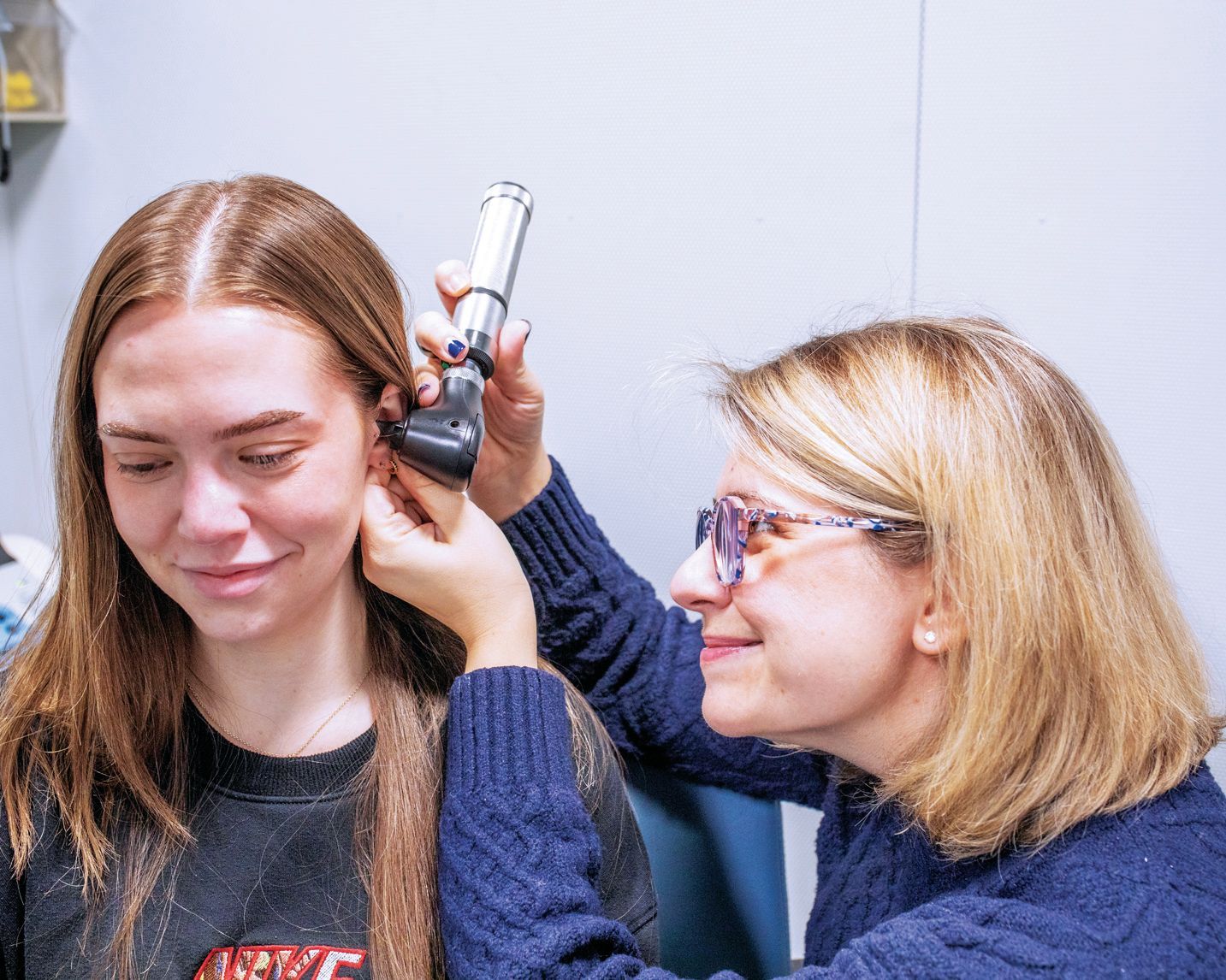
What is an Audiologist?
Audiologists are doctoral-level, licensed healthcare professionals trained in hearing, tinnitus, balance and communication health.
Most audiologists complete:
- Four years of undergraduate education.
- Four years in a Doctor of Audiology (Au.D.) program.
- Approximately 2,000 hours of hands-on clinical experience, including a one-year, full-time externship (clinical residency).
- State licensure and ongoing continuing education.
Some audiologists also pursue advanced specialty training in areas such as tinnitus, cochlear implants, auditory processing, pediatric hearing care and balance disorders.
Recent Posts








RELATED ARTICLES