
Emerging skin treatments
At Apex Clinical Research Center, patients who participate in clinical trials receive leading-edge skin treatments at no cost. Here’s the latest study.

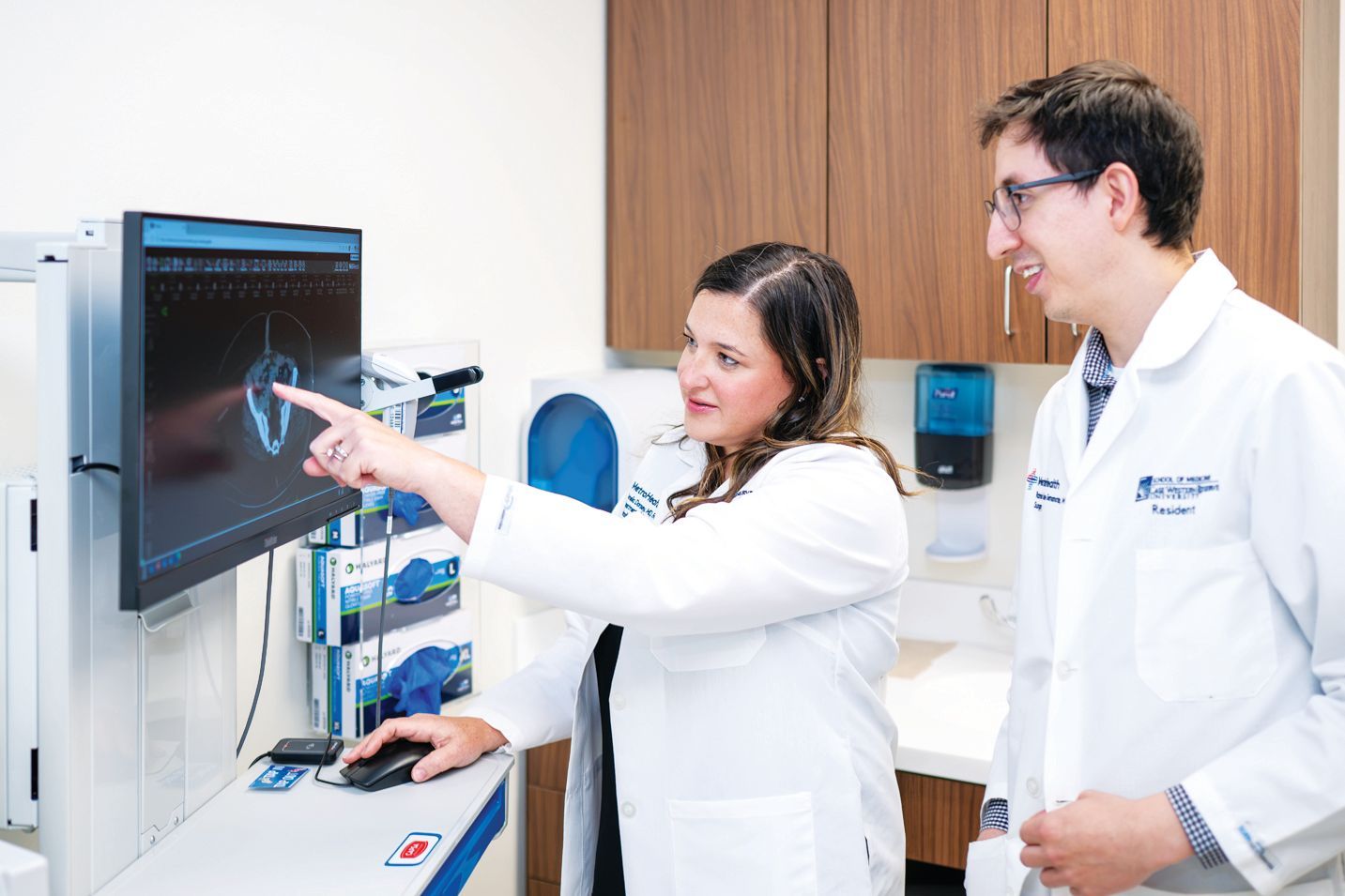
If painful pustules on the palms of your hands or soles of your feet are making everyday life difficult, Apex Clinical Research Center may offer hope for much-needed relief. Local clinical trials are exploring promising new treatments for palmoplantar pustulosis. (Photography: Adrienne Rose)
Most of us rarely think twice about how much we rely on our hands and feet—until using them becomes painful. For people with palmoplantar pustulosis (PPP) that pain can be excruciating.
This rare autoimmune skin condition causes pustules—inflamed skin sores filled with sterile white pus—to form on the palms of the hands and the soles of the feet. Because these areas are in constant use, the skin has little opportunity to heal, creating an ongoing cycle of irritation that can make everyday activities, such as walking, typing and driving, incredibly painful.
For those living with PPP, finding effective, long-lasting relief can make a meaningful difference in daily life. That’s why Apex Clinical Research Center is conducting dermatology clinical trials focused on advancing potential new treatments for the condition.
Clinical trials give participants an opportunity to access investigational treatments while helping researchers learn potential new ways to manage it. Apex currently has three PPP clinical trials examining a topical medication, an oral medication and an injectable, all designed to reduce pustules and flare-ups, with the goal of improving disease control and quality of life.
“Though this is a rare disease, it is extremely painful for those who have it,” says Megan Sevilla, a physician assistant at Apex Dermatology’s Mayfield office and a clinical research sub-investigator at Apex Clinical Research Center. “We believe that no patient should be left behind, which means if patients don’t have access to medications because a lack of insurance or their medical insurance doesn’t cover a specific treatment, clinical trials can give them access to promising new medications that may provide relief, heal or improve their skin condition.”
Participants receive all study-related care, including thorough physical exams, bloodwork and EKGs, at no cost, while gaining access to new treatments before they become widely available. In many studies, participants also receive a stipend to compensate for time and travel.
Those with at least five active pustules on their hands or feet may qualify for Apex’s clinical trials, which are evaluating medications that have been FDA-approved for other conditions but are being studied for their potential to treat PPP.
“Some of the FDA-approved medicines we use for other skin conditions are showing promise for treating PPP as well,” Megan says, noting that up to 20% of patients with PPP also have plaque psoriasis and psoriatic arthritis. “We are examining a topical medication that is a JAK inhibitor, proven to be highly effective to treat inflammatory skin conditions including hand eczema, as well as an oral medication targeting the TYK2 inhibition pathway already utilized to treat plaque psoriasis. We also are looking at an injectable that blocks the inflammatory pathway critical to the pathogenesis of psoriasis.”
Through these clinical trials, Apex Clinical Research Center is helping advance new treatment options—right here in Northeast Ohio.
Apex Clinical Research Center
- 29111 Cedar Road, Mayfield Heights
- 4124 Munson Street NW, Canton
- 6150 Park Square Drive, Suite B, Lorain


Clinical Trials for Skin Conditions
Gain access to promising new medications and treatments at Apex Clinical Research Center. As part of Apex Skin’s 15-clinic dermatology system, the center conducts clinical trials for myriad skin conditions, evaluating both FDA-approved and investigational therapies ranging from a new oral medication designed to help reduce plaque severity in adolescents with psoriasis who have not responded adequately to topical therapies to an injectable treatment designed to reduce immune-driven hair loss and support scalp hair regrowth.
Study-related care is provided at no cost, no insurance required and qualified participants may receive compensation for time and travel.
Clinical trials include: Atopic dermatitis (eczema), plaque psoriasis, chronic urticaria (hives), vitiligo, hidradenitis suppurativa, prurigo nodularis and alopecia areata.
“We help educate patients about their skin condition and make their patient experience positive throughout the clinical trial,” says Theresa Sedlak-Hanslik, vice president of research operations.
Click here to learn more or schedule a free consultation.
Recent Posts





RELATED ARTICLES