
Medical weight management
At MetroHealth, Dr. Amelia Dorsey is helping patients reclaim their lives through medical weight management. Here’s how she can help you, too.
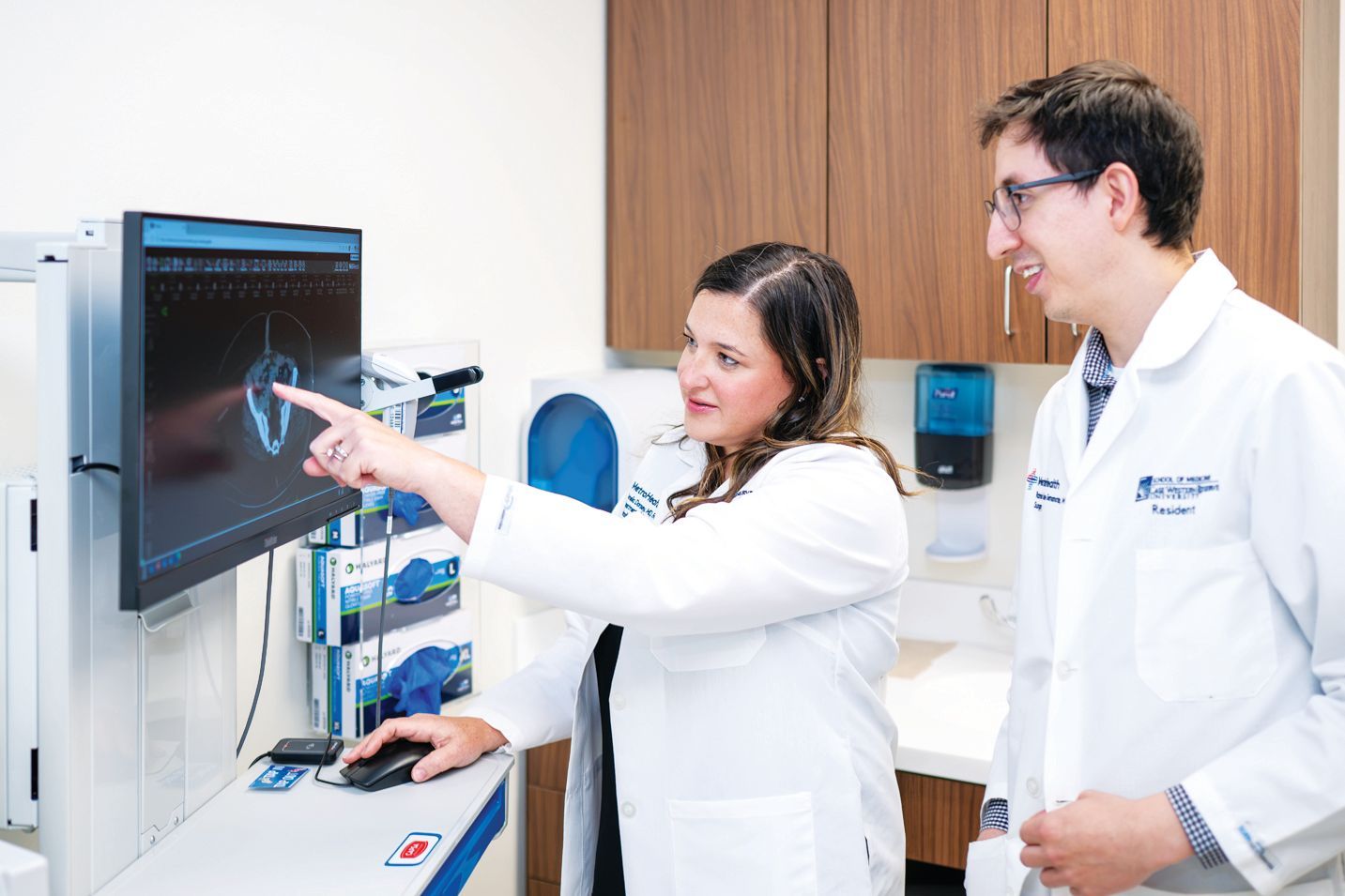
Bariatric surgery can offer powerful and durable treatment for obesity. The robotic technology allows Dr. Amelia Dorsey (left) to operate with highly precise instruments and offer complex revisional bariatric operations as well. Pre-operative imaging helps with surgical planning while the robotic technology translates to less pain, a quicker recovery and a faster return to normal activities. Also pictured is Dr. Ramiro Cadena-Semanate, surgical resident.
For anyone who has struggled with weight loss, the hardest hurdle may be figuring out where to start.
Choices today seem endless: GLP-1 meds, nutrition plans, exercise and lifestyle changes and bariatric surgery. Each has its place, but determining which approach will work best for you may require professional help.
“The most sustainable path to your optimal weight and well-being can look different for each person,” says Dr. Amelia Dorsey, a bariatric surgeon at MetroHealth. “That’s why our multidisciplinary team helps guide patients through steps that fit their lives.”
Conversation, Education, Long-Term Support
Dr. Dorsey begins by asking about a patient’s weight journey. How long have they struggled? What have they tried? What are their goals?
“These questions are critical because obesity isn’t simply a matter of willpower or making better lifestyle choices,” she says. “It is a legitimate chronic disease that can cause lasting changes in the body and is associated with dangerous conditions such as high blood pressure and diabetes.”
Rather than telling someone to just “eat less and exercise more,” Dr. Dorsey believes the first step should be education about available tools.
These include medical weight management, lifestyle changes and minimally invasive bariatric surgery—often working in combination. The program also involves a registered dietitian and psychologist.
“Our talented team touches every step in the process,” she says. “This makes a real difference after the initial weight loss. Research increasingly demonstrates the importance of frequent touchpoints and long-term support. Someone who takes meds through an online program or has surgery without becoming part of an integrated program may not see the same success that we do.”
Modern Medications
The rise of GLP-1 medications has changed the weight-loss conversation.
“For us, the science of targeting hormonal pathways is particularly exciting,” she adds. “We are at the tip of the iceberg in terms of what we understand. Researchers are learning more about the complex relationships between the gut and brain.”
To illustrate how powerful that connection is, Dr. Dorsey cites a landmark study in which skinny mice were injected with the gut bacteria of obese mice or humans—and then gained weight and accumulated fat mass.
“I see these discoveries leading to even more targeted treatment in the future,” she says.
Medication can be an effective part of a long-term weight-management plan, but Dr. Dorsey cautions against viewing any treatment as a one-size-fits-all solution.
“Someone may respond beautifully, then later lose insurance coverage or discover that maintaining the weight loss requires that treatment the rest of their lives,” she says.
Exploring Surgical Options
Bariatric surgery can offer powerful and durable treatment for obesity.
“The goal isn’t simply about making the stomach smaller,” explains Dr. Dorsey, who is the first surgeon to ever perform a robotic sleeve gastrectomy at MetroHealth. “Procedures such as sleeve gastrectomy and gastric bypass also produce significant hormonal changes that affect hunger, the feeling of fullness and appetite.”
The technology provides enhanced 3D visualization and allows her to operate with highly precise instruments. That translates to less pain, a quicker recovery and a faster return to normal activities.
Crafting Sustainable Solutions
What about dieting? Dr. Dorsey is skeptical of the cycle of caloric restriction followed inevitably by weight regain.
“Yo-yo dieting is terrible for you,” she says, emphasizing that short-term, highly restrictive plans rarely provide lasting solutions.
“I feel the most successful approach is to have that conversation with an expert first,” she says. “Ultimately, the most rewarding part of my work isn’t watching a number on a scale change. It’s seeing patients get back the life they want to live.”
MetroHealth
2500 MetroHealth Drive, Cleveland

MetroHealth’s Dr. Amelia Dorsey makes recommendations for medical weight management that may include lifestyle changes and minimally invasive bariatric surgery—often working in combination. The program also involves a registered dietitian and psychologist.
Which Treatment is Best for You?
Wondering which weight-loss treatment would provide life-long results for you? Schedule a consultation with the Weight Loss Surgery & Weight Management Center by calling 216-778-7433.
Recent Posts










RELATED ARTICLES