
Where healing happens
At the new University Hospitals Behavioral Health Institute, located inside UH Lake West Medical Center, people struggling with severe mental health conditions can finally begin the journey to healing.
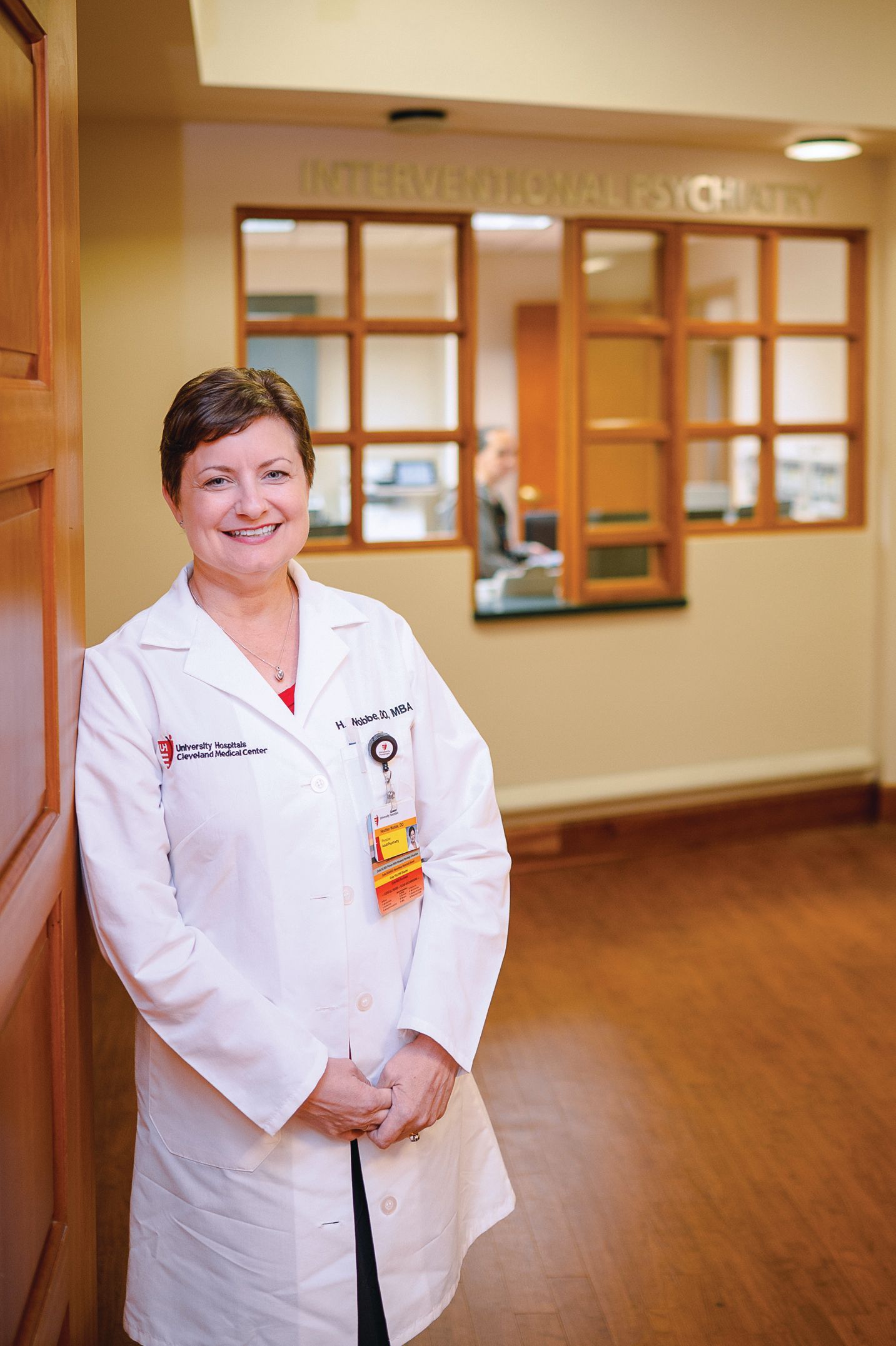
Heather Wobbe, DO, board-certified psychiatrist serves as University Hospitals Medical Director for the Emergency Psychiatric Access Team.
With one in five adults in the United States experiencing mental health issues—and many more suffering in silence—it can be difficult to know where to turn for help. Now, thanks to University Hospitals, care is closer to home.
The UH Behavioral Health Institute has opened a new, dedicated home for its interventional psychiatry services at UH Lake West Medical Center in Willoughby.
“We feel so fortunate. This is a statement from the system that they’re prioritizing behavioral health patients,” says Jeanne Lackamp, MD, Chair of the Department of Psychiatry at UH Cleveland Medical Center and Director of the UH Behavioral Health Institute. “We feel privileged to be able to welcome our patients to a space where healing can take place.”
Located on the fifth floor in the former labor and delivery unit, the welcoming, light-filled facility features eight private treatment suites where a team of psychiatrists and nurses provide compassionate care.
“We designed a space that is more relaxing and conducive to healing,” says Heather Wobbe, DO, board-certified psychiatrist who serves as University Hospitals Medical Director for the Emergency Psychiatric Access Team. “It’s a place for quiet reflection and calm recovery.”
The focus here is to provide vital treatment options for patients suffering from severe behavioral health conditions, who have not responded to conventional therapies such as medications and psychotherapy.”
“We’re bringing both well-established treatments and novel approaches to the local community in a way that is truly accessible,” Dr. Wobbe says. “This new interventional psychiatry unit is offering hope to those who have not responded to other treatments.”
The unit is currently offering four specialized treatments, with space to add more FDA-approved modalities as they come down the pipeline.
Among them is Electroconvulsive Therapy (ECT), the gold standard for treating depression and other serious mental health conditions. According to Dr. Wobbe, this treatment boasts an efficacy rate of up to 80%.
“I have treated patients with such severe depression they cannot get out of bed, take care of their children or go to work, and within four to six treatments they are back on their feet,” Dr. Wobbe says.
The community hospital also offers Deep Transcranial Magnetic Stimulation, which uses magnetic energy to stimulate areas of the brain, as well as intranasal esketamine and ketamine injections.
“These services are ideal for folks who have struggled with mental health issues and are seeking a second opinion or exploring other options,” she says. “These treatments offer a different approach than medications or therapy that can be life changing.”
Access to interventional psychiatry services is available only through a provider referral. For more information on the Interventional Psychiatry programs, visit UHhospitals.org/Interventional.

Jeanne Lackamp, MD, Chair of the Department of Psychiatry at UH
Cleveland Medical Center and Director of the UH Behavioral Health Institute
Advanced Treatments Now Available
Using evidence-based procedures to address severe mental health conditions, particularly those resistant to treatments like medications and psychotherapy, University Hospitals now offers these leading-edge treatments at Lake West Medical Center:
- Intranasal Esketamine: FDA-approved for treatment-resistant depression or severe depression with suicidal ideation or behavior, this drug is self-administered as a nasal spray, with staff monitoring vitals for two hours afterward.
- Ketamine Injections: Administered by an IV infusion in the arm, the effects of ketamine therapy can last anywhere from days to weeks. These IV infusions are an off-label treatment for bipolar depression or major depressive episode.
- Electroconvulsive Therapy (ECT): During the procedure in which the patient is under general anesthesia, a brief electrical stimulus is delivered through electrodes applied to the scalp to improve depressive symptoms as well as help current medication work more effectively.
- Deep Transcranial Magnetic Stimulation (TMS): Using a unique, helmet-like machine to deliver magnetic pulses deep into the brain to stimulate neural activity, this noninvasive treatment addresses depression and obsessive-compulsive disorders
Recent Posts








RELATED ARTICLES