
The year of the bee
Lake Metroparks is buzzing with new ways to learn about and support vital pollinators.
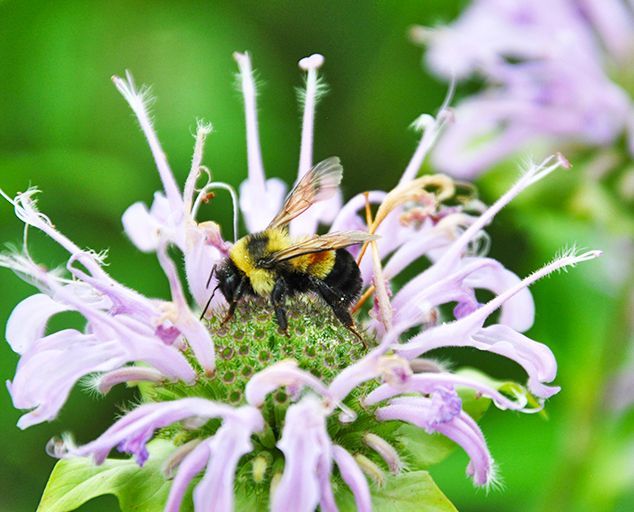
Pollinators—bees, butterflies, moths, beetles, hummingbirds—move pollen from plant to plant, ensuring that flowers bloom, fruits form and food webs thrive. (Photography: Jill Utrup, USFWS)
Chew on this: One of every three bites of food you eat exists because of bees and other pollinators. Apples, blueberries, almonds? Thank a bee.
Pollinators—bees, butterflies, moths, beetles, hummingbirds—move pollen from plant to plant, ensuring that flowers bloom, fruits form and food webs thrive.
Mimi caught up with Lake Metroparks Senior Outdoor Connections Manager Becky Parkin to catch the buzz.
“They may be tiny, and often considered pests, but bees are incredibly important to powering our ecosystem and food supply,” says Becky. “They’re responsible for pollinating about 70 percent of the world’s crops.”
For these reasons, she says Lake Metroparks has declared 2026 The Year of the Bee.
“Ohio is home to a rich variety of more than 500 species of bees,” she says. “For our celebration, we are focusing on three common ones: the endangered rusty patched bumble bee, the blue orchard mason bee and the big, noisy carpenter bee. People are afraid of carpenter bees, but they are actually harmless and not aggressive.”
Throughout the Year of the Bee, Lake Metroparks is hosting programs, exhibits, hands-on activities and special events. Educational displays at Penitentiary Glen Reservation, Jordan Creek Park and Lake Metroparks Farmpark highlight bee species and their roles in nature. You can collect pollinator-themed ID cards and discover fun facts: Did you know only female bees and wasps have stingers?
It’s all part of a bigger mission—helping people in Lake County see the incredible activity happening in their own backyards.
And speaking of backyards, Becky adds it’s important to notice, appreciate and protect pollinators.
“Many species are declining due to habitat loss, pesticide use, disease and climate change,” she says. “You can attract them by letting part of your yard go wild. And to create a healthy habitat, never use chemical pesticides.”
Lake Metroparks provides more than 4 million visitors each year with educational and recreational programs and activities. For more information, visit LakeMetroparks.com.
Recent Posts




RELATED ARTICLES