
Try curling!
Here’s how you and your friends and family can experience one of the fastest-growing sports in America. Learn to curl at the Mayfield Curling Club.
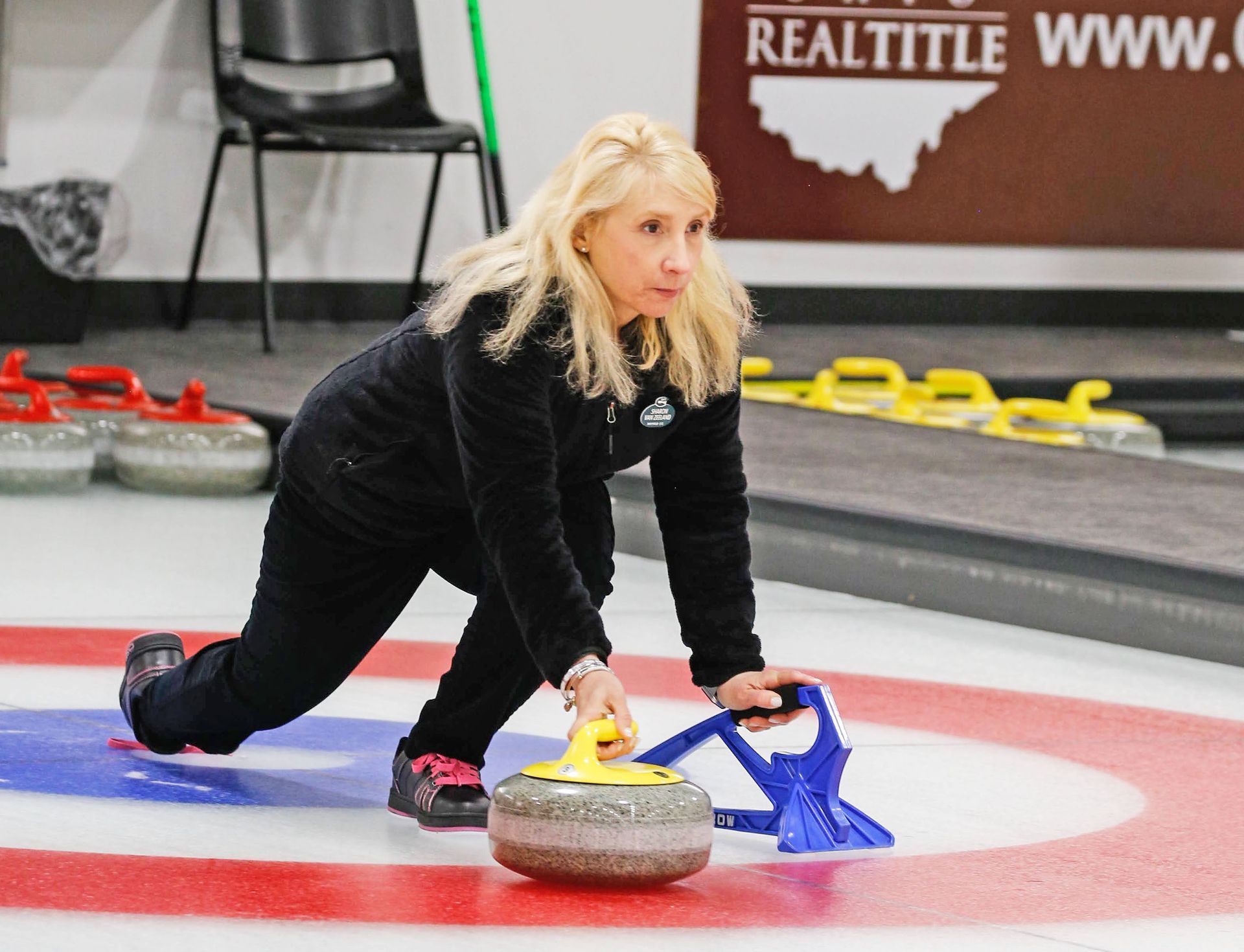
At the Mayfield Curling Club, players deliver a stone down the “sheet” toward the “house” with instructions from the “skip.” The stones are given a slight spin upon delivery, hence the sport’s name.
Curling is one of the fastest-growing sports in the U.S., and with the 2026 Winter Olympic Games coming up, its popularity is expected to surge even further this winter. Locally, you can enjoy curling all winter long at the Mayfield Curling Club or have your own “Instagram moment” by attending a clinic or scheduling a one-time private party or company team-building event.
I knew virtually nothing about curling when I sat down last week with club president Matt Weida and secretary Bob Obrovac. The pair taught me that curling is a highly social sport as fun and challenging as it is steeped in tradition.
“Like golf, curling started in Scotland in the 1500s, and it maintains a lot of Scottish traditions,” Matt explains. “For example, the final teams in a bonspiel are escorted onto the ice by a bagpiper.”
A bonspiel?
That’s right. Curling—like Quidditch—has its own vocabulary (a “bonspiel” is a curling tournament).
Based on my recent education from Matt and Bob, I asked if the following two sentences explain the sport using the proper vocabulary:
“In curling, a thrower delivers a stone from the hack down the sheet toward the house without passing the hog line, while the skip hollers out the weight call before shouting to the sweepers where to place the rock. After eight ends, the teams gather in the warm room for a celebratory broomstacking.”
The guys look at each other and smile.
“Hey, you got it!” Bob says. “But it’s important to note that curling ice is not like hockey ice. It’s pebbled—tiny bumps the stones slide on. The house is 150 feet from the hack. On regular hockey ice, you’d never be able to get the stone to travel that far.”
By the way, the sport is called “curling” because the thrower puts a slight spin on the stone. All curling stones used in official Olympic competition must be made from a specific, rare granite found on the island of Ailsa Craig in Scotland.
Anyone Can Play “Chess on Ice”
Curling is a strategic sport, which is why it’s often called “chess on ice.” (It’s also called the “roaring game” because of the distinctive noise made by the stones as they slide across the ice.) However, playing the sport is easy.
“Curling requires more athleticism than most people realize, but almost anyone can do it,” Matt explains. “We host plenty of birthday parties, bachelor and bachelorette parties, and corporate events where first-timers have a lot of fun. At its heart, curling is a social activity for both men and women, and like golf, it’s self-governing, meaning there are no referees. There’s etiquette involved, and everyone is expected to perform honorably. It’s an amazing sport that brings out the best in people.”
There are no age restrictions, either.
“We have members from age 8 to 80,” Bob says. “Some teams are made up of three generations—kids, parents and grandparents. And our members come from all over Northeast Ohio.”
If you’re a bit more serious than simply attending an event, the club offers a New Curler Clinic, which is a four-week, in-depth curling experience.
“About 80 percent of people who go through our clinic become a member,” Matt says. “Once you try it, it’s addictive. Plus, curling makes winter fly by.”
Mayfield Curling Club is located at 23103 Miles Road in Cleveland. For more information, visit MayfieldCurling.com, email info@mayfieldcurling.com, or call 216-510-6001.


You're Invited!
You’re invited to attend Mayfield Curling Club’s “Try Curling” event on Saturday, November 15, or Sunday, December 21, from 2-4 p.m. Or register for the club’s four-week “New Curler Clinic” being held on Sundays, October 26 and November 2, 16, and 23, from 10 a.m. to noon. For more information or to register, visit MayfieldCurling.com.
Recent Posts









RELATED ARTICLES