
The curious case of wine diamonds
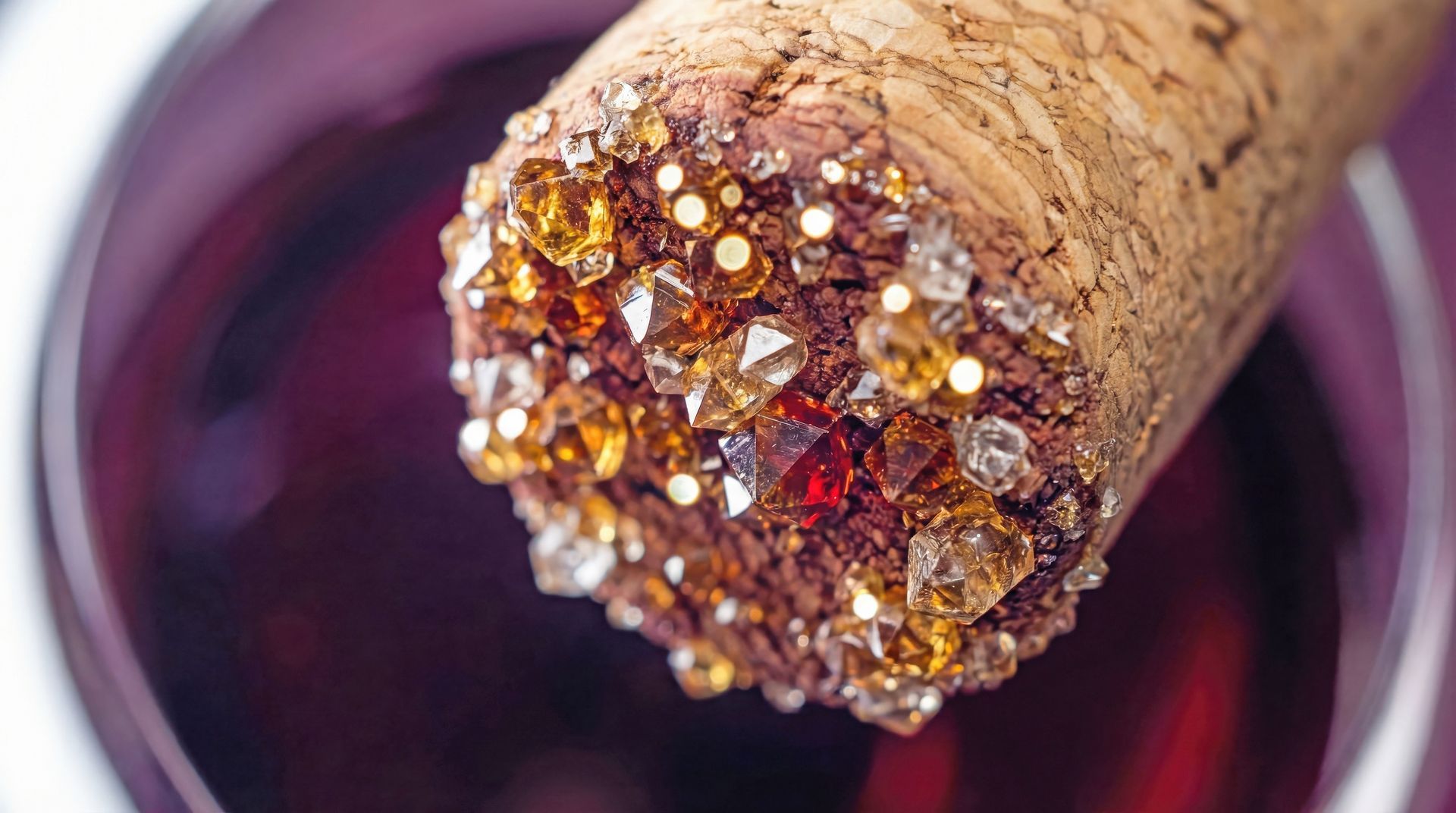
The next time you see crystals in your wine glass, you may be witnessing a natural bit of winemaking chemistry.
However you pronounce it, a Meritage wine might be what you’ve been looking for to offer family and friends this holiday season.
Last month we dove into white wines that are higher in acid and discovered how they are converted into sweet, dessert-style wines, such as Sauternes, when infected with a certain fungus.
Let’s explore another aspect of higher-acid white wines. If you keep reading, you’ll find out a wine fun fact I’m willing to bet you never knew.
“Have you ever brought home a bottle of white wine, put it in the fridge, left it there for a few days then noticed small crystals floating in the bottle?” Jim Sperk of the Northern Ohio Wine Guild asks. “Those crystals are known as wine diamonds. They don’t look appealing, but they are harmless and tasteless. So, how and why do they form?”
Jim explains that wines contain several different types of acid, predominantly tartaric acid, which imparts the tartness you experience when drinking it.
“The naturally occurring salt of tartaric acid is unstable potassium bitartrate,” Jim says. “Those ‘wine diamonds’ are the tartrate that may precipitate if the wine is chilled sufficiently, at temperatures below 40 degrees.”
As part of their process, most of the larger wineries include a stage called cold stabilization in which the wine is transferred to a tank chilled with glycol to sub-freezing temperatures. After two weeks, the wine is then transferred to another tank and readied for bottling.
“What is left on the walls and the floor of the tank after the cold stabilization process are the potassium bitartrate crystals,” Jim says. “The crystals need to be removed before the tank can be used again so they are scraped from the walls, collected and delivered to a secondary source where they are refined and sold as cream of tartar.”
That’s right. The same cream of tartar that bakers use to develop meringue, or fluff up eggs is a byproduct of the winemaking process. I told you to keep reading.
“When that cold stabilization process is not complete, or is not used at all, those wine diamonds may appear in your bottle or glass,” Jim says. “A simple way to get rid of them is to decant the wine before serving.”
For information about the Northern Ohio Wine Guild, contact Jim Sperk at tinymoonwines@usa.net.
Recent Posts





RELATED ARTICLES