
Bariatric surgery vs. GLP-1 medication
The GLP-1 craze for losing weight still has considerable momentum, but there may be a better, more permanent option that’s right for you.
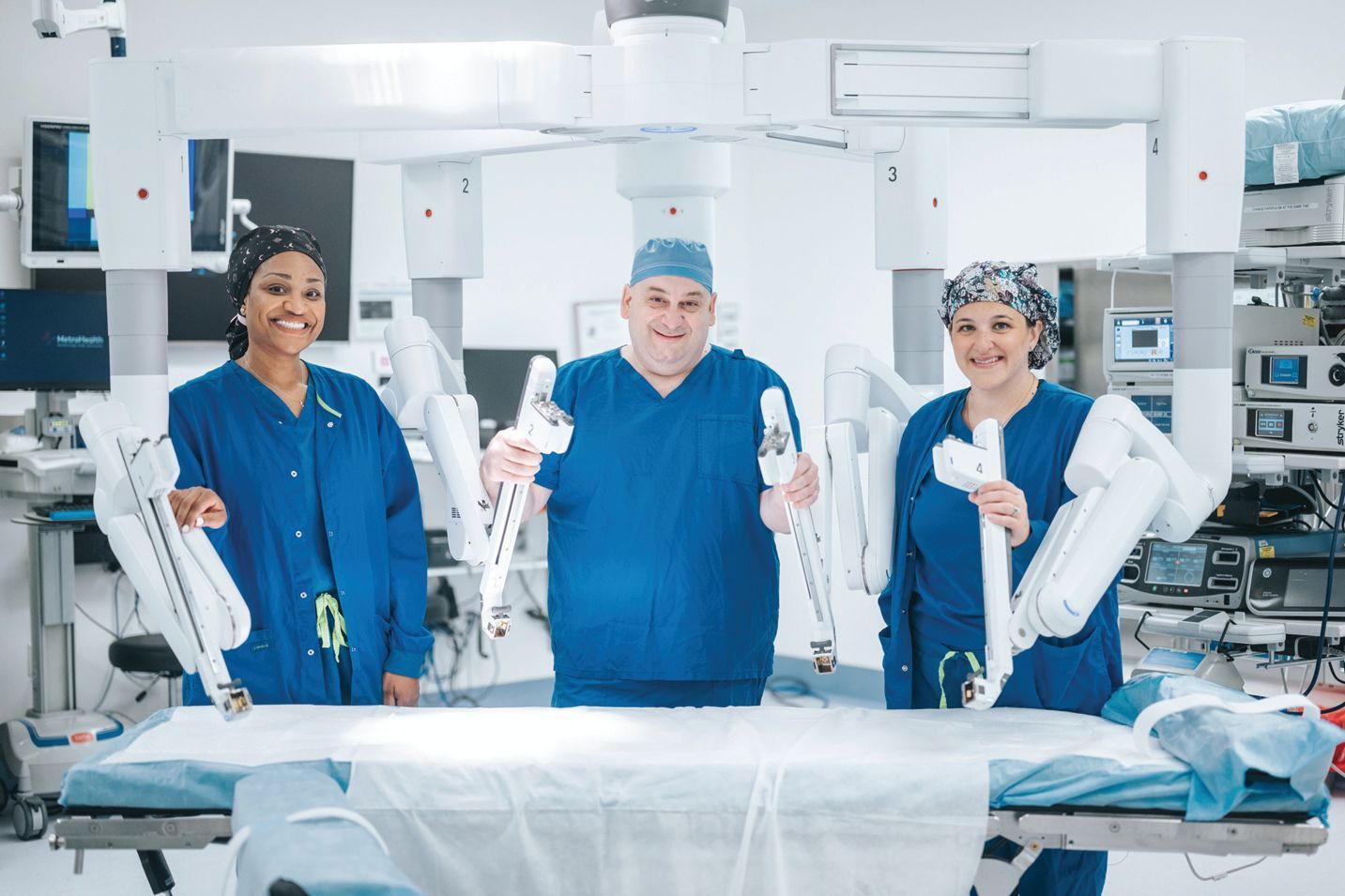
The MetroHealth bariatric surgical team includes Dr. Aneesah McClinton (left), fellowship-trained robotic-assisted bariatric surgeon; Dr. Sergio Bardaro (center), surgical director of the Weight Loss Surgery & Weight Management Center; and Dr. Amelia Dorsey, bariatric and general surgeon.
The rise of GLP-1 medications may be trending in the world of weight loss intervention, but bariatric surgery is still not only relevant, but it is also often the best option for patients battling obesity.
I caught up with Dr. Aneesah McClinton, a MetroHealth surgeon who is fellowship-trained in robotic-assisted bariatric surgery, to find out why. Along with fellow surgeons Dr. Amelia Dorsey, bariatric and general surgeon, and Dr. Sergio Bardaro, surgical director of the Weight Loss Surgery & Weight Management Center, she treats patients through every step of their journeys.
“Weight loss is not just about aesthetics,” says Dr. McClinton, who joined MetroHealth in 2024. “It’s about improving serious medical conditions that are linked to obesity, like diabetes, high blood pressure, kidney disease, certain cancers, arthritis, sleep apnea and liver disease.”
Working with patients over a two-year period, Dr. McClinton coordinates care to ensure success, calling in nutritional counselors, cardiologists, endocrinologists, and kidney and liver specialists, as well as sleep apnea practitioners.
“We work with patients pre-operatively and post-operatively,” she says.
The guidelines for who is a candidate for bariatric surgery differ from the guidelines for who qualifies for using a GLP-1. Bariatric surgery is recommended for anyone with a BMI over 35 or BMI over 30 with weight-related conditions. GLP-1 medications are recommended for BMI over 30 or BMI over 27 with weight-related conditions.
The Robotics Difference
Dr. McClinton reports that while about one-third of all bariatric procedures done in this country are assisted by robotics, due to her fellowship training, nearly all of the ones she performs are.
Working with the da Vinci Surgical System, she and her fellow surgeons sit behind a console and control robotic arms during the minimally invasive surgery.
“Through enhanced 3D visualization and greater precision, patients can have better outcomes, such as reduced pain and scarring, and a shorter hospital stay.” she adds. “The procedure is safe, and has a similar safety profile as gallbladder or appendix removal, or a knee replacement. I usually make five or six 1-centimeter incisions that are barely noticeable after they heal. We numb the nerves along the abdominal wall to reduce pain following the procedure.”
Success Rates
If you’re taking a hard look at the efficiency differences between GLP-1s and bariatric surgery, you need to compare the sustained, long-term outcomes.
Dr. McClinton shares a 2024 study from a group of surgeons that showed bariatric surgery produced better results over time than lifestyle modifications or weight-loss medications.
“The study found that after losing weight via lifestyle modifications (healthy diet and exercise), people were able to lose 7.4% of their total body weight; with the two most common medications (semaglutide and tirzepatide), they lost 10.6% and 21% respectively of their body weight; and with bariatric surgery, they lost 29.5% with a sleeve and 31.9% with a gastric bypass,” she says.
It gets interesting, however, when you find out that according to another study, most patients who stop taking GLP-1 meds regain the majority of their lost weight within 18 months of going off them. As soon as their appetite returned, the metabolic benefits were reversed. Bypass surgery is considered in the medical community to be a permanent anatomical fix.
“Another factor to consider in weighing your options for treating weight loss is cost,” she explains. “Bariatric surgery is a one-time fixed cost that can last the rest of your life. The medications will cost you every month for as long as you have to keep taking them.”
Dr. McClinton says her favorite part of the job is having a front-row seat to see how people’s lives improve after surgery.
“Making them healthy again and extending their lives is powerful,” she says. “It’s hard to describe how much people change after they lose significant weight. They tell me they are able to do things like play with their kids again.”
MetroHealth Main Campus Medical Clinic
2500 MetroHealth Drive, Cleveland

For a two-year period, MetroHealth’s Dr. Aneesah McClinton guides patients through every step of bariatric surgery, coordinating a team of specialists to ensure success post-surgery. Her favorite part? Watching her patients transform and embrace their healthier, happier lives.
Recent Posts




RELATED ARTICLES