
Breast cancer awareness month
October is Breast Cancer Awareness Month, a reminder that a screening mammogram, which takes less than 30 minutes, remains the single most effective tool for catching breast cancer early.

Nearly 75% of women diagnosed with breast cancer have no family history of the disease, which is why annual mammograms are recommended for all women at average risk starting at age 40, regardless of family history.
A screening mammogram remains the best way to detect breast cancer in its earliest stage, when it is smallest and most treatable. Breast cancer detected early—before it has spread—has a five-year survival rate of up to 99%. Yet every year, misconceptions and outdated information cause some women to delay or skip the appointment that could make a big difference in their care.
A Few Minutes, A Lifetime of Benefit
A screening mammogram typically takes less than 30 minutes from start to finish. For women at average risk, a baseline mammogram is recommended at age 40, followed by annual screenings. Women at higher risk—because of family history, genetics or other factors—may need to begin screening earlier or more frequently, which is why it’s important to talk with a doctor about individual risk.
“Many of the reasons women give for putting off a mammogram are based on information that’s not true,” says Holly Marshall, MD. “Whether it’s a concern about radiation, a misunderstanding about family history, or thinking self-exams are enough on their own, once patients have the facts, they’re usually much more comfortable moving forward with screening mammogram.”
Setting the Record Straight
Nearly 75% of women diagnosed with breast cancer have no family history of the disease, which is why annual mammograms are recommended for all women at average risk starting at age 40, regardless of family history. The radiation used in a mammogram is minimal—comparable to the amount a person is exposed to during a flight across the Atlantic Ocean—and its benefits far outweigh this small risk. And while monthly self-exams remain a good habit, they aren’t a substitute for a mammogram, which can find changes well before they can be felt. Current guidelines also recommend that pregnant and breastfeeding women continue their regular screening mammograms, and that women should not stop screening based on age alone. About one in five breast cancers occurs in women age 75 and older.
“A mammogram is one of the simplest things a woman can do for her long-term health,” Dr. Marshall says. “The earlier we find something, the more treatment options she has and the better her survival.”
University Hospitals will be with you every step of the way.
This October, University Hospitals encourages every woman to make her mammogram a priority—not out of fear, but because a few minutes today can mean far more options tomorrow.
University Hospitals
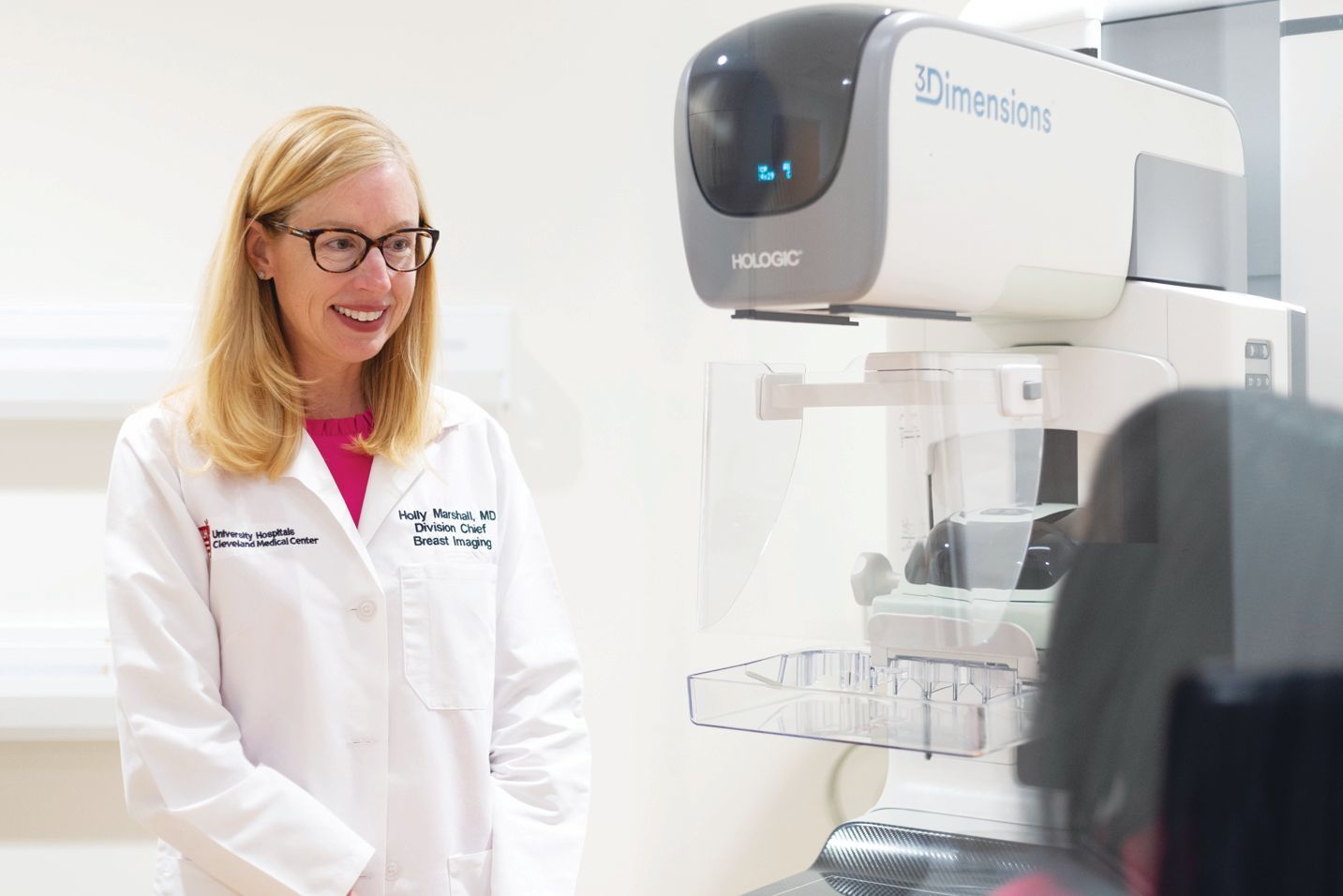
A screening mammogram at University Hospitals is the best way to detect breast cancer in its earliest, most treatable stage.
University Hospitals Breast Centers
University Hospitals operates comprehensive breast centers across Northeast Ohio, dedicated to breast cancer care.
• UH Cleveland Medical
Center (UH Breen Women’s
Health Pavilion) *
• UH Ahuja Medical Center *
• UH Avon Health Center *
• UH St. John Medical Center
(Maltby Breast Health Center) *
• UH TriPoint Medical Center *
• UH Elyria Medical Center
(Hampson Mole Breast Health
Suite)
• UH Geauga Medical Center
• UH Geneva Medical Center
• UH Parma Medical Center
• UH Portage Medical Center
• UH Samaritan Medical Center
* Comprehensive, NAPBC-Accredited Breast Centers
Recent Posts







RELATED ARTICLES