
Beyond books
The Willoughby-Eastlake Public Library is committed to doing more than simply offering reading materials. Introducing, the rain garden.
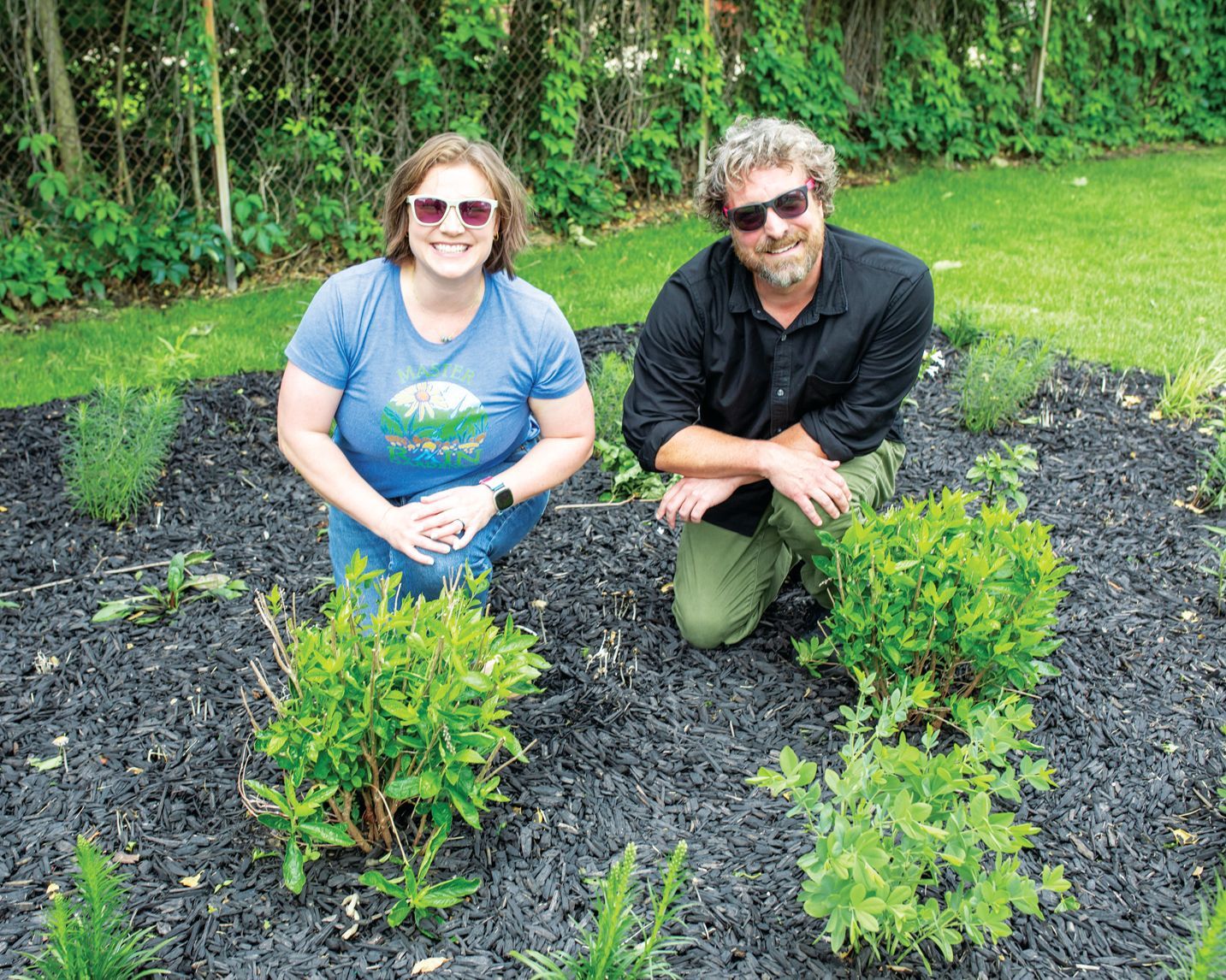
Completed through a partnership with Chagrin River Watershed Partners, Lake Soil & Water Conservation District and the Lake County Stormwater Management Department, the rain garden project was months in the making and took a day in May to install. Pictured: Natalie Gertz-Young, a conservation educator and Patrick Culliton, a certified master rain gardener. (Photography: Francis Angelone)
A ripple on water can have a surprisingly widespread impact. At the Willoughby-Eastlake Public Library, that ripple effect has taken the shape of a newly installed 400-square-foot pollinator rain garden designed to benefit both people and the planet.
“A project like this can have a significant impact on our environment and the Lake Erie watershed,” says Library Director Eric Linderman. “We can’t wait to interweave it into our children’s programming. They especially enjoy outdoor, real-life, hands-on learning opportunities.”
Located steps from the gazebo in Wes Point Park in Downtown Willoughby, the 20-by-20-foot garden is a hardworking system that captures rainwater runoff from the nearby library building’s main downspout, allowing it to soak into the ground slowly. Completed through a partnership with Chagrin River Watershed Partners, Lake Soil & Water Conservation District and the Lake County Stormwater Management Department, the project was months in the making and took a day in May to install by a group of 20 dedicated volunteers.
Why Rain Gardens Matter
“In the simplest terms, rain gardens are shallow, saucer-shaped depressions designed to collect and hold water temporarily, around 48 hours,” says Natalie Gertz-Young, a conservation educator for the Lake Soil & Water Conservation District. “The function of a rain garden is to increase the amount of water being absorbed into the ground, and reduce the amount of polluted run off that enters Lake Erie, which is a source of drinking water for 12 million people in the US and Canada. The native materials we put in, about a dozen different types of plants, further filter the stormwater organically. We handpicked them since they are able to withstand wet conditions and even standing water.”
How much water does the average rain garden capture and naturally filter? More than you’d think—about 30,000 gallons of water a year, enough to fill a bathtub 600 times. (The morning the photo shoot took place for this story was after a night of heavy rain, over an inch, and the garden had soaked up the runoff beautifully.)
Carving Out a New Habitat
A nice additional benefit, according to library Marketing & Public Relations Manager Patrick Culliton, who is also a certified master rain gardener, is the garden’s impact extends beyond stormwater management.
“It will also provide a critical habitat, offering food and shelter to butterflies, songbirds and beneficial insects, which are all essential to a healthy ecosystem,” he says. “These are lessons we look forward to sharing with children through our youth programming, using the garden as an educational tool, allowing young learners to explore the Monarch life cycle, native plants, rain gardens and more.”
You’ll find the garden lovely to look at, with an attractive variety of plants, including several species of milkweed, which are known to attract Monarch butterflies, a species that’s been on the decline over the years due to loss of habitat.
“In agricultural areas along monarch migration routes, less milkweed grows than in decades past due to increased edge-to-edge field planting and use of herbicide resistant crops,” she says. “By introducing it in places like this, we can help fill that gap.”
Natalie and Patrick report that as people become more concerned with protecting their environment, they’ve seen increased interest from both the public and government, with gardens by libraries, city properties, schools and yards.
Maintained by a small but devoted group of volunteers, the library’s garden is expected to continue evolving, much like the ripple that inspired it. Patrick adds that in the long-term plans, they hope to become an official Monarch Waystation, helping support the iconic butterfly’s migration.
To find out more about rain gardens, or how to build your own, go to CRWP.org, the website for Chagrin River Watershed Partners. To check out the five-week online or in-person training to become a certified master rain gardener, go to NEOMasterRainGardener.org.
Willougby-Eastlake Public Library
38115 Euclid Avenue, Willoughby
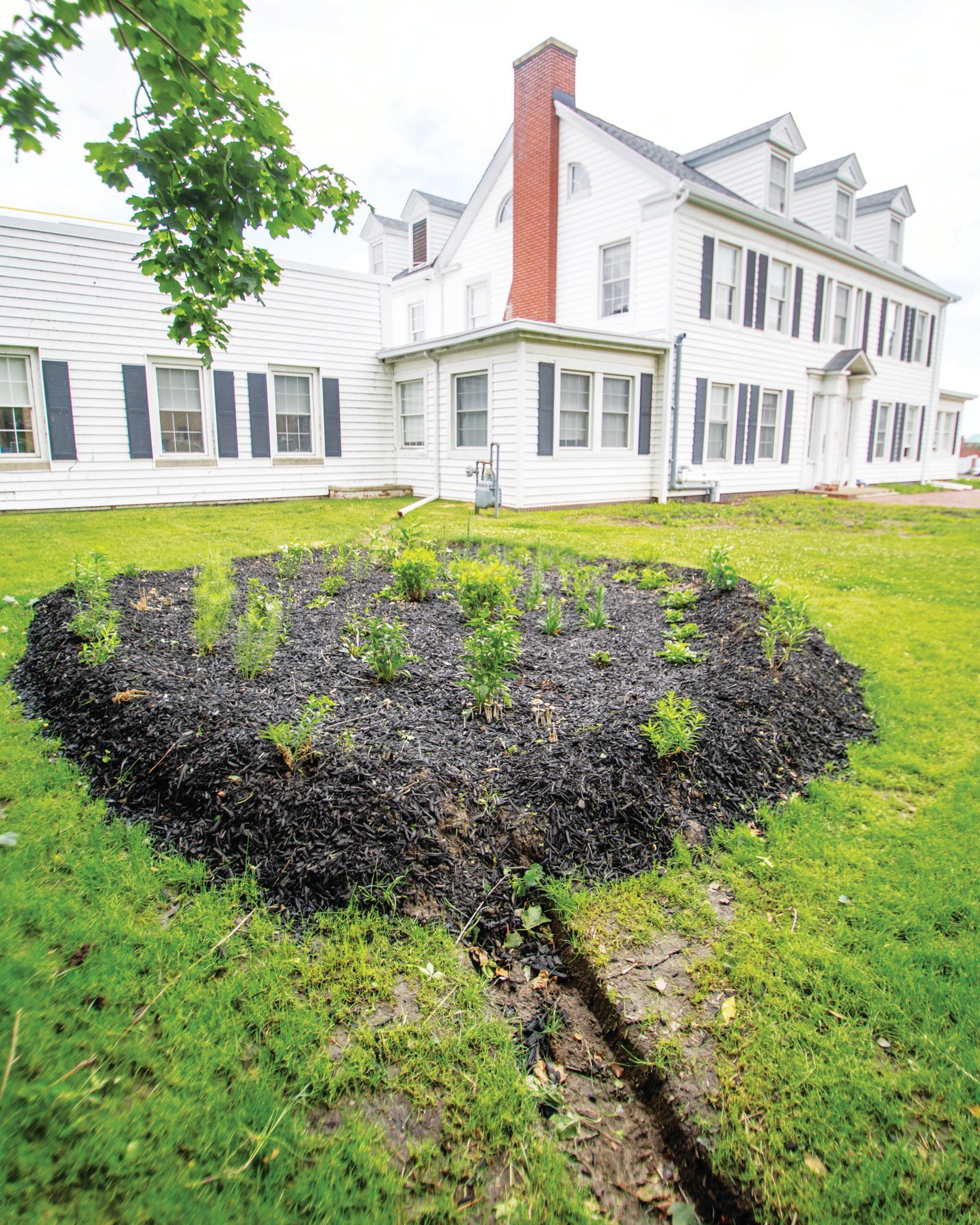
Located steps from the gazebo in Wes Point Park in Downtown Willoughby, the 20-by-20-foot rain garden is a hardworking system that captures rainwater runoff.
Recent Posts





RELATED ARTICLES