
The right cuts
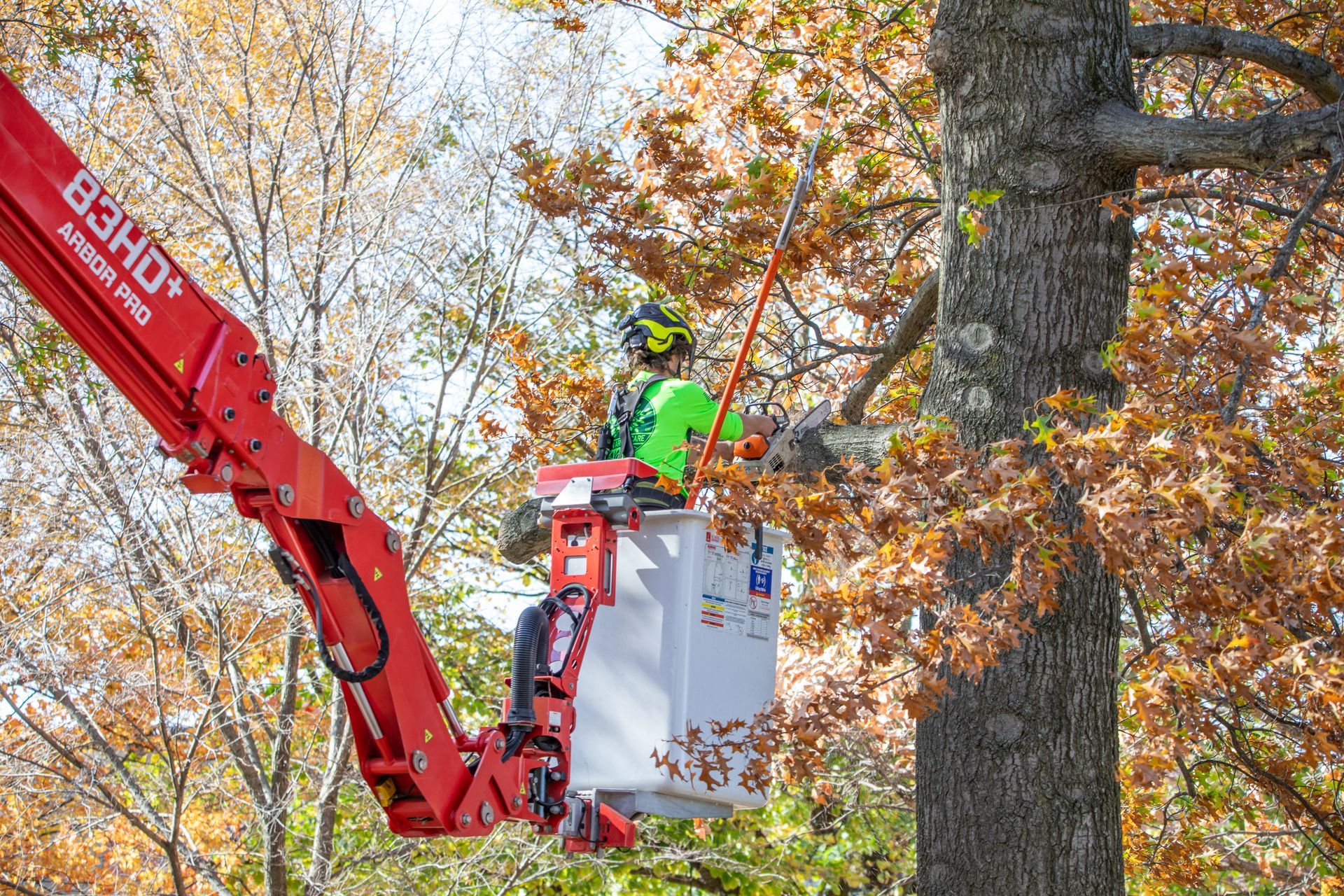
Taking out weak or poorly positioned tree limbs now can reduce the risk of bigger problems, especially when storms bring heavy snow, ice or high winds.
Caption one goes here
When it comes to caring for trees, sometimes less really is more.
Fewer leaves in late fall give arborists a clearer view of a tree’s structure, revealing problems that can be difficult to spot beneath a full summer canopy. And sometimes, slowing a tree’s growth above ground can improve its health below.
For Jay Dalton, ISA-certified arborist and co-owner of Titan Arbor Care, both approaches help trees stay healthy, structurally sound and safe.
Late fall through winter is prime pruning season for many trees. With branches exposed, Titan’s arborists can identify dead, damaged or crossing limbs, weak branch attachments and other potential hazards.
“It’s not just about removing branches,” Jay explains. “It’s about making the right cuts. Taking out a weak or poorly positioned limb now can reduce the risk of bigger problems, especially when storms bring heavy snow, ice or high winds.”
But not every tree benefits from more branches and foliage.
For trees that grow too quickly, need frequent trimming or crowd into tight spaces, Titan offers plant growth regulator treatments designed to slow canopy growth.
By reducing shoot growth, these treatments can help redirect resources toward fine-root development, improving a tree’s ability to absorb water and nutrients.
The benefits extend beyond the roots. Slower growth can mean less frequent pruning, particularly for trees near homes, driveways, sidewalks or power lines. Growth regulators may also help trees better withstand stresses, such as drought and poor soil.
For trees that need additional support, Titan offers deep root biostimulant treatments to promote root development and tree health.
“Every tree is different,” Jay says. “Some need pruning to improve their structure. Others benefit from slowing their growth or giving their roots a little extra support. There’s no single approach that works for every tree.”
Sometimes healthier trees start with less: fewer problem branches, slower growth above ground and more attention to the roots below. For Titan Arbor Care, it comes down to knowing what each tree needs—and what it doesn’t.
Guard your yard. Call 216-586-6955; Titan Arbor Care is standing by. For a complete list of services, visit TitanArborCare.com.
Recent Posts








RELATED ARTICLES